(Article)
Social and food brands in 2026: balancing closeness and relevance, the Food Sensitivity advantage
2026, like the years before it, rewrote the rules for how a brand builds value on social media.
Feeds are saturated with AI-generated content, people are increasingly skeptical of what they see (especially when it's sponsored content), and trust has shifted away from large institutions toward voices capable of showing an authentic point of view.
In this less than rosy scenario, food and beverage brands start with a rare advantage, because they deal with something people love, repeat every day, and load with meaning.
The key is finding the right way to communicate that meaning and make it the brand's own.
Authenticity today is measured by closeness
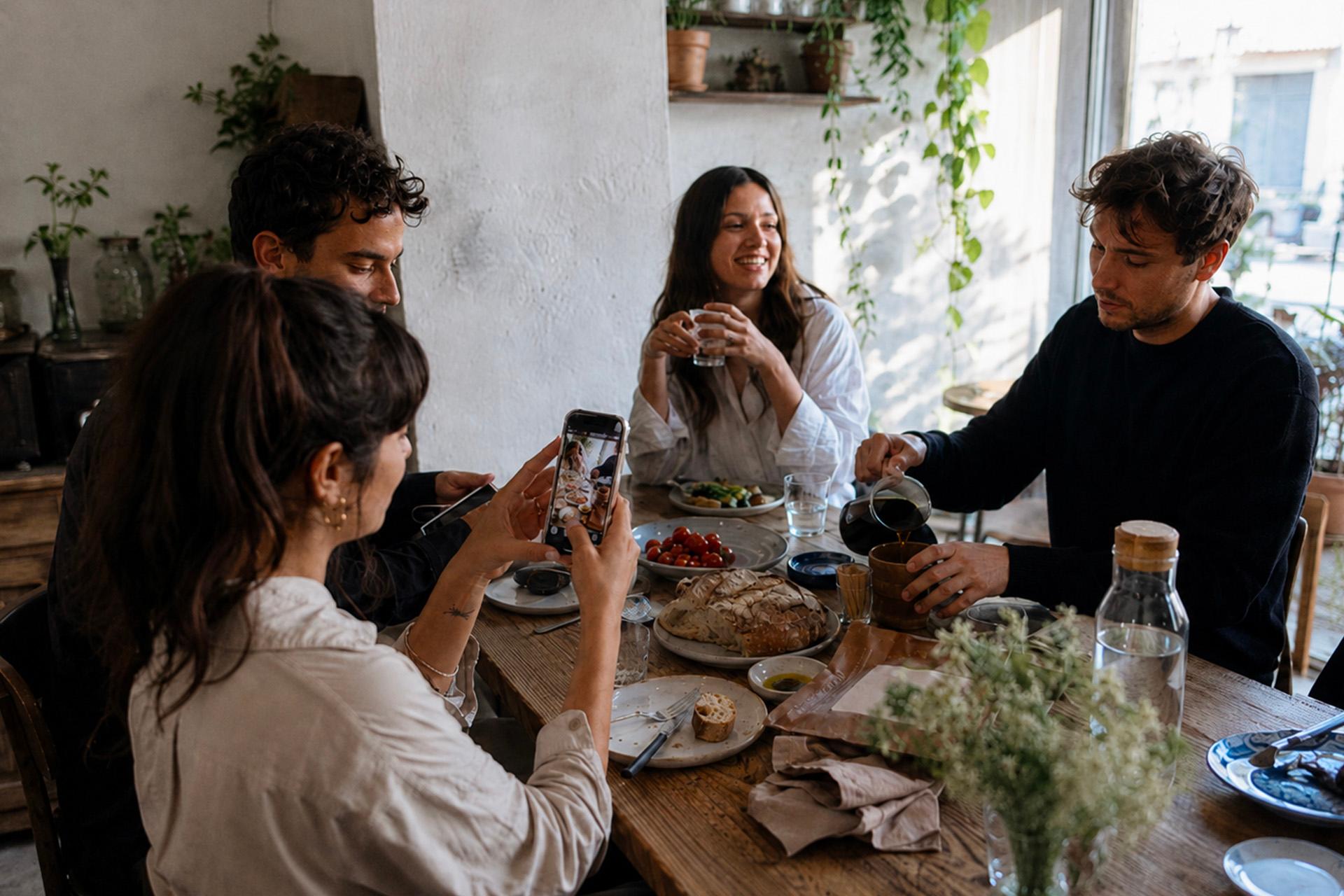
Spectacular, over-produced content is losing effectiveness. People look for emotional connection in the simple gestures of everyday life, and authenticity is now judged by emotional closeness more than by the perfection of the staging.
Daily micro-rituals: breakfast, grocery shopping, the shared table, the gesture of opening a product. These are moments that tell a brand's identity better than any polished campaign.
The skill lies in recognizing which of these moments carry real value for a brand and which ones ring false.
The food and beverage campaigns awarded this year at Cannes Lions (the creativity festival) all point in the same direction. The best ideas ask people to take part, turning everyday behaviors and cultural moments into shared experiences.
Heineken won the top award in the social category, rewarding with a beer at the bar anyone who moved their conversations from their phone to an in-person meeting, turning everyday friction into a real occasion.
Cadbury used the product itself as a cultural gesture, making sharing personal and recognizable.
KitKat, hit by the theft of an entire truckload of product just before Easter, chose transparency instead of hiding what happened, generating over two hundred million dollars in media value in about ten days.
The common thread is clear. The brands that win are the ones that read their audience's culture and know how to turn it into participation, not the ones that simply talk about themselves.
Provenance is the new luxury
Social media has democratized the aesthetic codes of luxury; even the fashion houses that safeguard the luxury world haven't used a serious, detached tone on social media for years.
Prestige has shifted from showing to making people understand.
People become passionate about the story of products, the production techniques, the cultural references.
It's hard to find a sector where this principle holds truer than in food.
The territory an ingredient comes from, the reason behind a particular production method, a producer's story, the logic of a season. Told with real expertise, these elements turn a product into an object of knowledge and desire, and raise the brand's perceived value.
"To engage, you've got to entertain"
So declared Sir John Hegarty, an advertising legend and co-founder of the agency BBH.
The only things that truly move the results are ideas and their ability to tap into a thought, a tension, or a story that belongs only to that brand. Everything else moves the numbers by a few points and nothing more.
A strong idea, rooted in a cultural insight and real knowledge of the product, produces value over time. And in a year when feeds fill up with content produced by machines, the mark of the human becomes the real distinguishing factor.
As Valerio Bassan, an authoritative voice in the Italian media landscape, also points out, the biggest risk is optimizing communication for algorithms while forgetting that there still has to be someone who wants to listen to you.
Food, made of warmth, memory and imperfection, lends itself to this humanity more than any other category.
Relevance matters more than numbers
Another useful shift in perspective for decision makers concerns how success is measured. Follower count has lost much of its weight: what matters far more is relevance within a community and the ability to be a point of reference in your own niche. There are channels with few followers that shape entire sectors, and large but dormant audiences that produce no value at all.
For a food brand this translates into a more mature strategic question: not how big we are, but how relevant we are to the people who really matter to us.
Passionate communities built around a product, a recipe, or a territory are an increasingly central asset for marketers. The direction is to move away from pushing content toward an audience and toward giving people a reason to seek us out, often by building occasions and experiences rather than simple posts.
The Food Sensitivity advantage
Line up these signals and they converge on a single point. In food in 2026, the winner isn't the loudest voice or the biggest producer, but the one who understands. Understanding the difference between a product with a protected designation and an anonymous one, respecting an ingredient's season in the communication calendar, grasping the emotional weight of a shared table without reducing it to a slogan.
At Erbacipollina, food is the first skill of the people who work here, and communication comes after, as the translation of a culture we have mastered. In a year when audiences reward authenticity, provenance and human sensitivity, this is the difference between communicating a product and telling the story of food.
This is the ground we choose to work on every day, with brands that want to build value and not just presence. If you lead communications for a food brand and are looking for a partner who speaks these codes as a first language, this is exactly the conversation we like to start.